
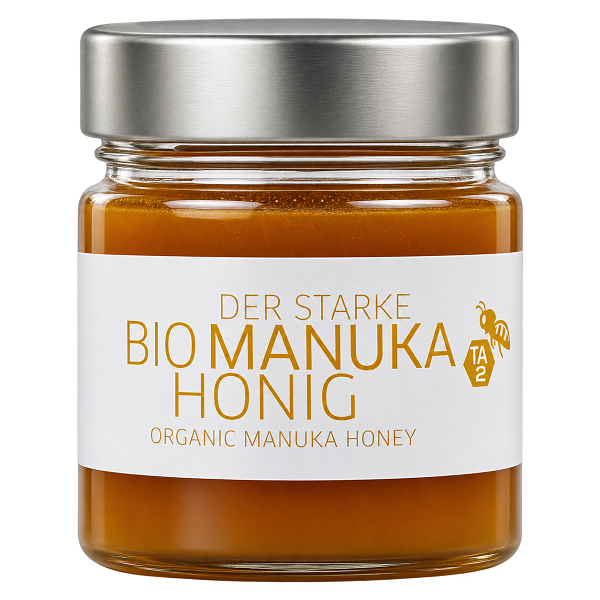
Organic Manuka Honey TA 25+ – 250 g | SONNENTOR
A unique organic manuka honey from New Zealand with a TA 25+ activity rating. Net weight: 250 g.
In stock
SONNENTOR / NEW ZEALAND
Nature’s Gold from Manuka Blossoms.
A unique type of honey from New Zealand, in certified organic quality.
ORIGIN
Pure Nature
✦
◇
◎
PRODUCT
Organic Manuka
| Activity | TA 25+ |
|---|---|
| Net weight | 250 g |
| Certification | ORGANIC |
| Brand | SONNENTOR |
CHARACTER
The Story of Organic Manuka Honey
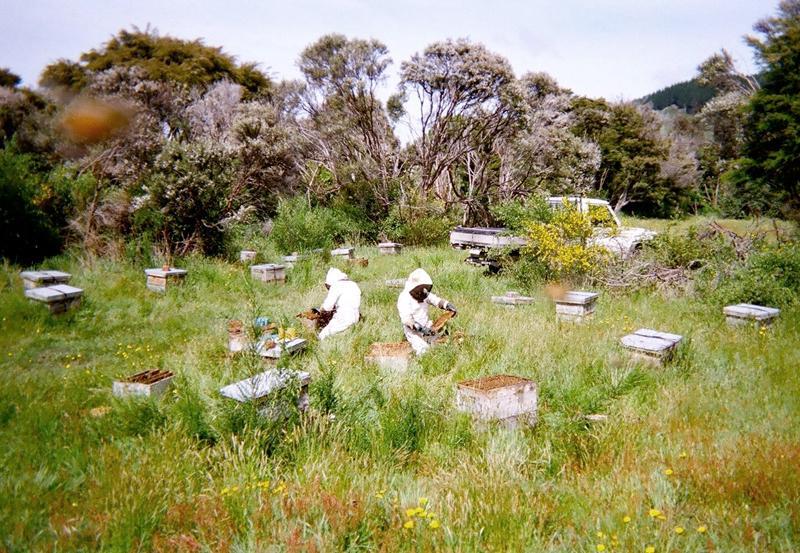
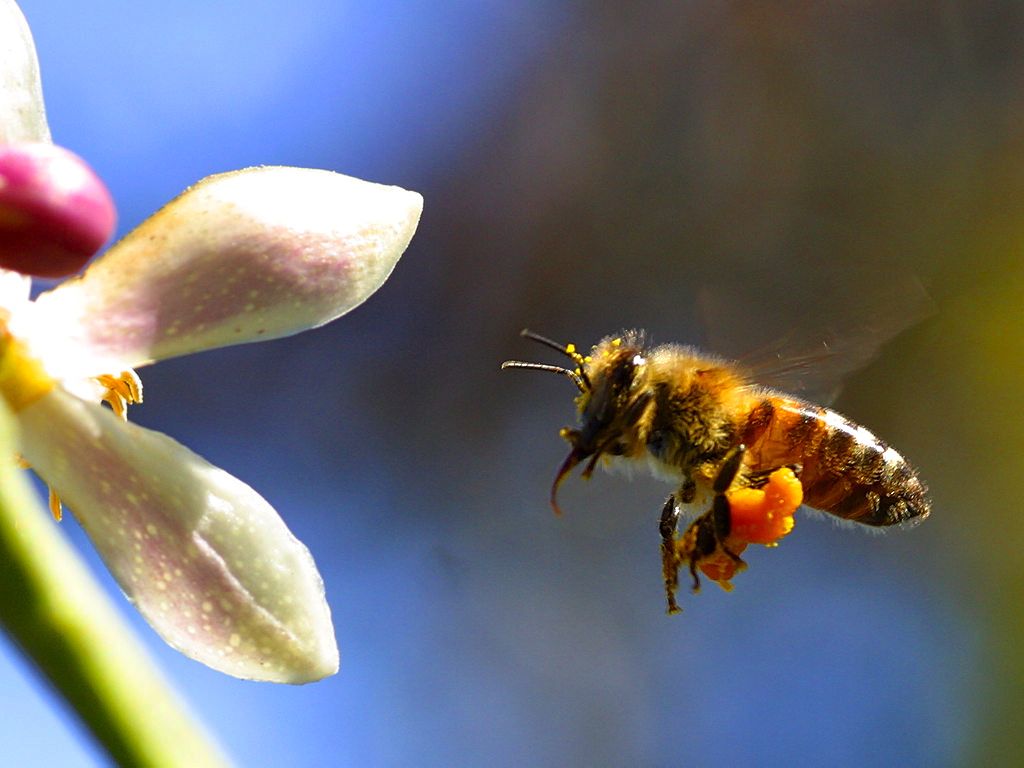
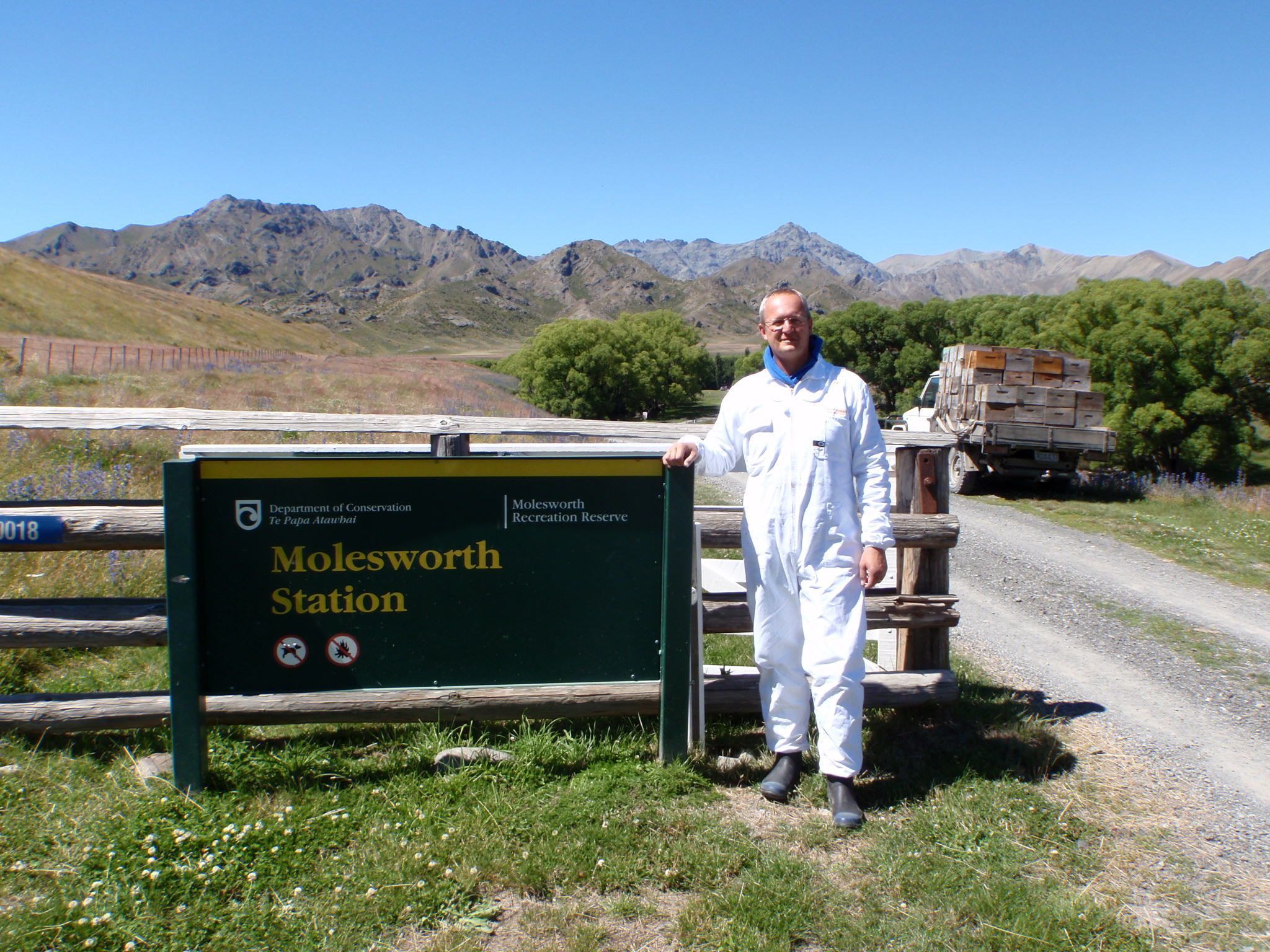
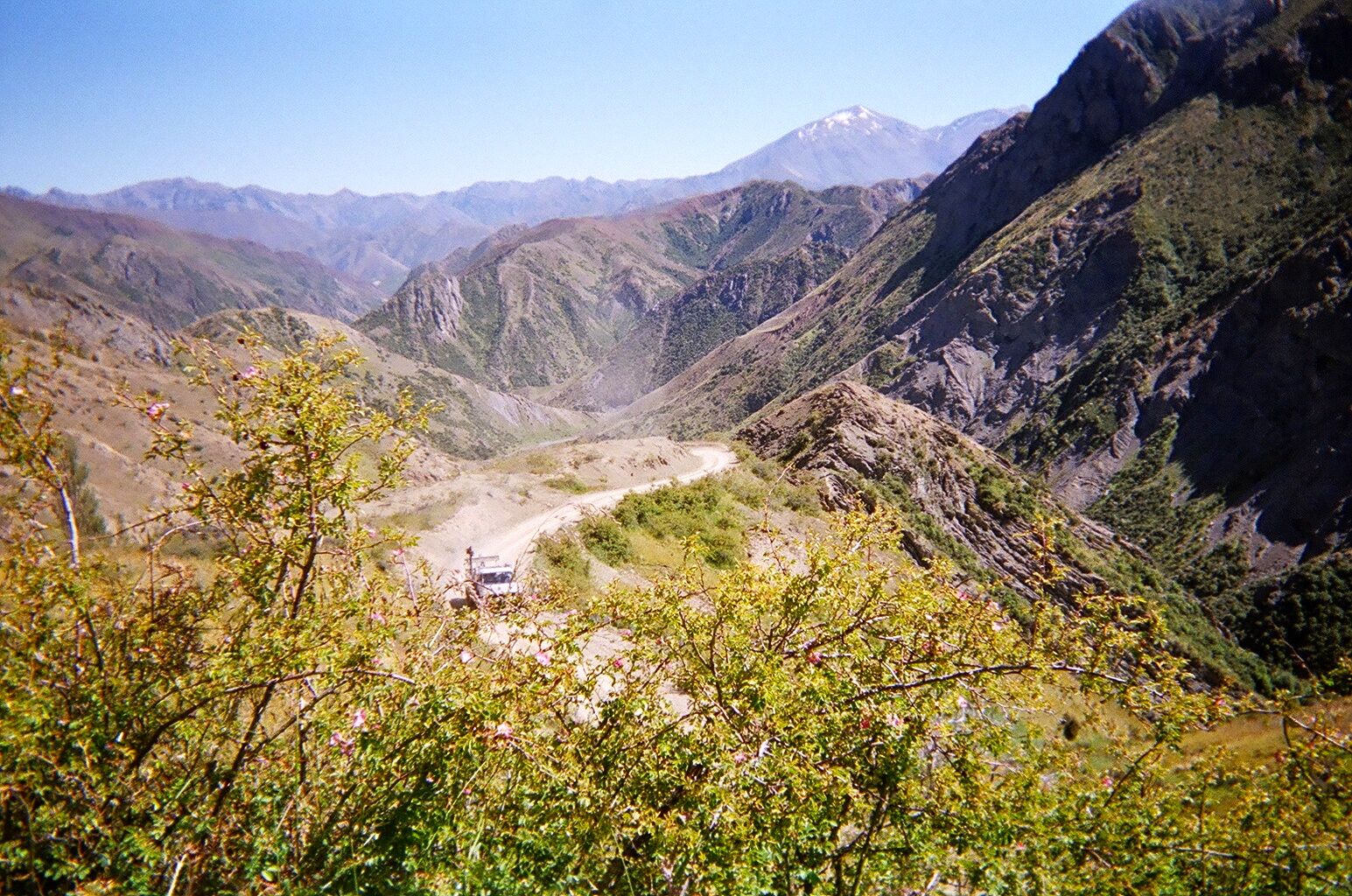
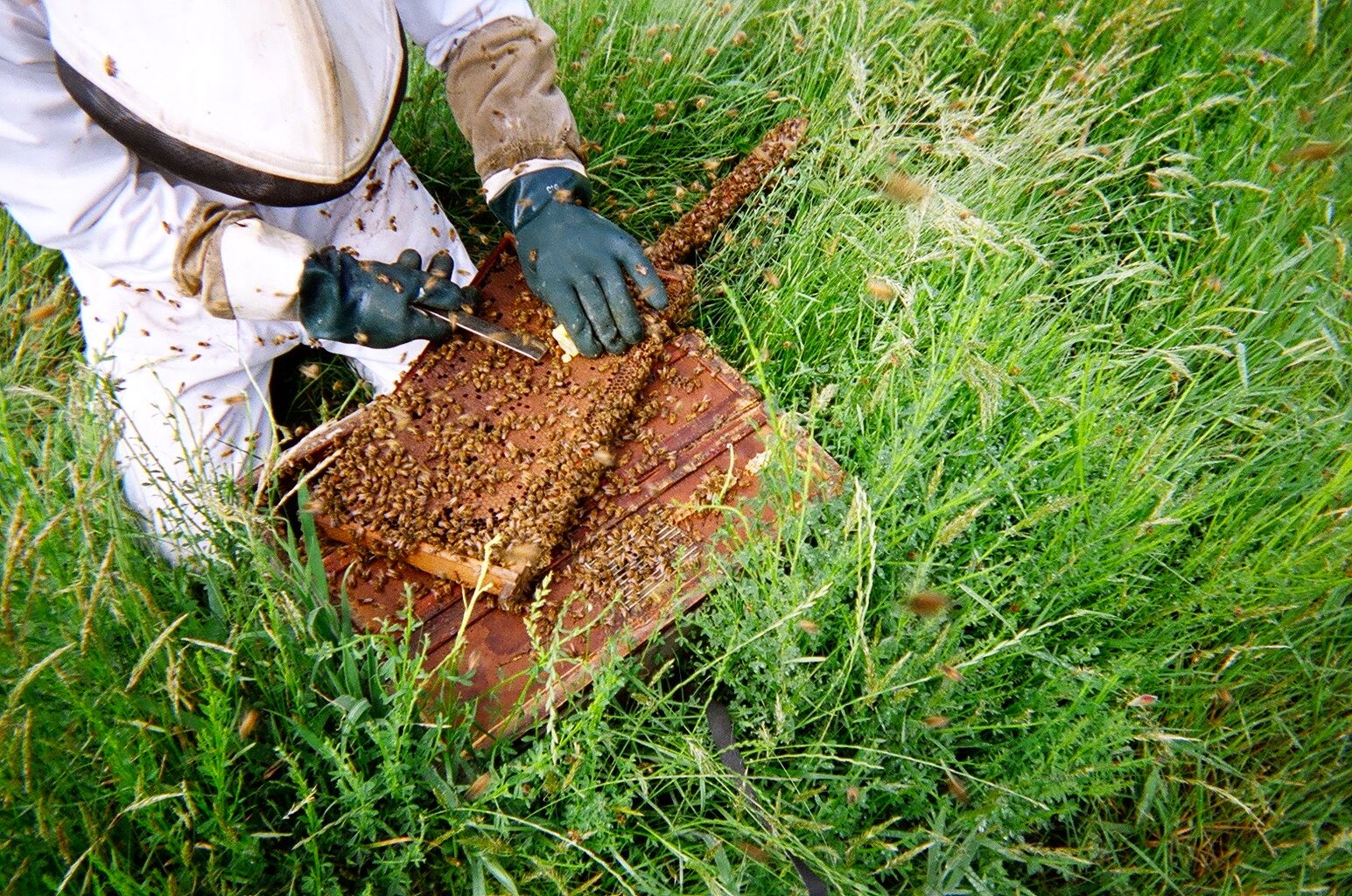
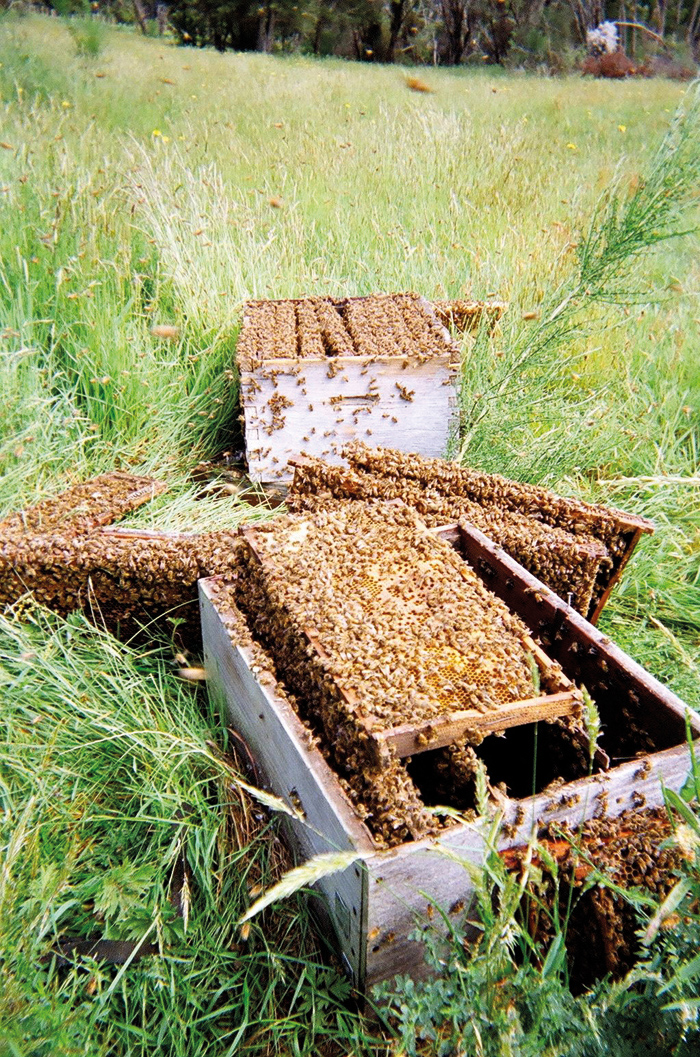
Our first manuka honey on this website. Certified organic, affordable, never damaged by heat, and with a particularly strong TA 25+ rating. This is a truly exceptional honey, so we recommend reading all the important information provided below… (The illustrations below are real photographs from the honey’s area of origin and production.)
What Is Manuka?
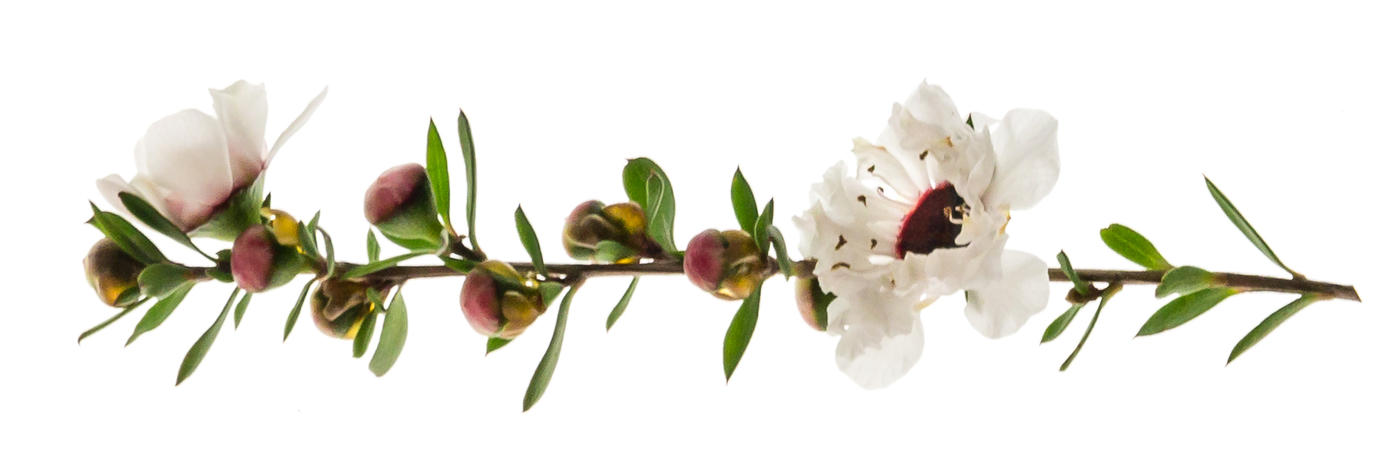
Manuka is the name given by the indigenous people of New Zealand to an evergreen shrub with white or pink flowers. Its botanical name in Slovak is manuka (Latin: Leptospermum scoparium). It is related to the well-known tea tree and, although it is now grown worldwide as an ornamental plant, it thrives particularly well in the mountainous regions of New Zealand and Australia. From these beautiful flowers, bees collect extraordinary nectar rich in valuable compounds and essential oils, which they transform into delicious honey. And not just any honey…
Where Does This Honey Come From?
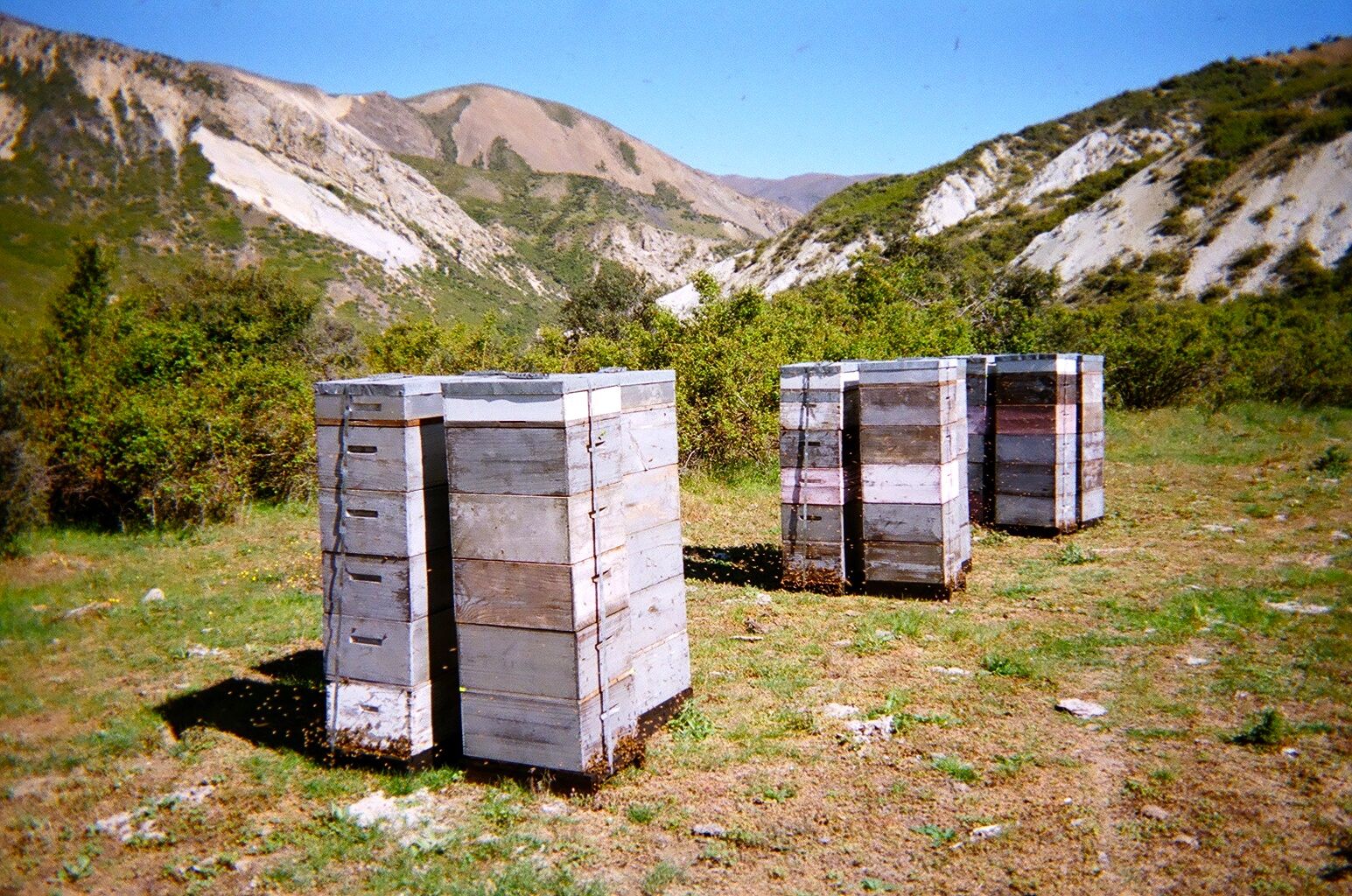
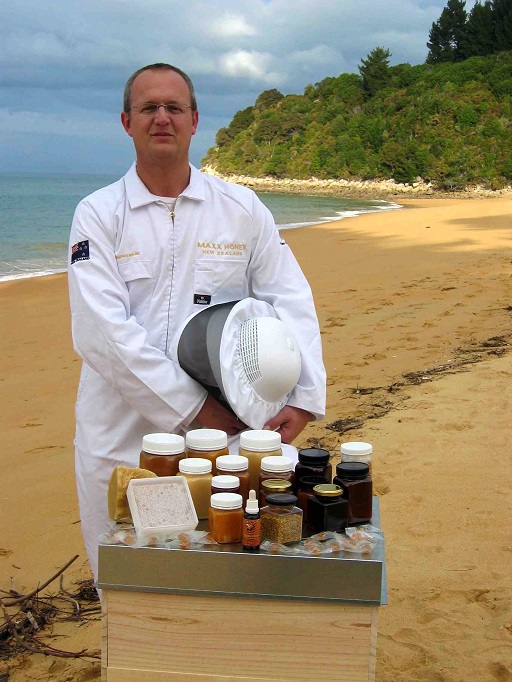
Manuka honeys commonly come from New Zealand. The supplier of this particular manuka honey is Bernard Schneider. Originally from Austria’s Waldviertel region, the birthplace of Johannes Gutmann, he decided to put down roots on the other side of the world, in the beautiful mountainous country of New Zealand.
Bernard practices beekeeping according to organic farming principles. For example, he treats varroa mites with thyme oil and does not feed his colonies sugar over the winter. His bees collect nectar across approximately 730 hectares of protected natural land, an estimated 300 hectares of which are forests forming part of his own reforestation program. Besides producing delicious honey, the project also allows new trees to be planted, their health to be maintained, and atmospheric CO₂ to be reduced on a global scale. Bernard is also working to counter the decline of bee colonies without artificial interference in the natural cycle of life.
What Makes Manuka Honey So Special?
Since ancient times, honey has been regarded as liquid gold. Manuka honey also stands out for its pronounced disinfecting properties, has an intense, spicy flavor, and contains many valuable compounds. Like thyme, heather, or buckwheat honey, it is among the truly highly valued types of honey (manuka honeys are, on average, among the most expensive honeys on the global market). Bernard Schneider never exposes his honey to temperatures above 40°C, in order to preserve its best qualities. He encourages customers to do the same. He recommends taking the honey in small spoonfuls or stirring it into a drink that should never be hot, as heat would destroy valuable active compounds. We recommend enjoying the honey directly from a spoon (not metal) or combining it with Ambrosia.
More About Manuka and Bees
TA Factor
This manuka honey is characterized by a high TA factor. “Total Activity” is a measure used as an indicator of honey quality. This manuka honey achieves a TA 25+ rating, indicating its antibacterial activity (for example, TA 25+ has an antibacterial effect comparable to a 25% phenol solution), and thus the honey’s disinfecting properties.
How Is the TA Factor Measured?
The TA factor is determined using the “agar well diffusion method.” A honey sample is applied to a surface containing bacteria, and the percentage of bacteria killed is assessed at set intervals. The higher the percentage of bacteria killed, the stronger the disinfecting effect and therefore the higher the TA factor.
And What Are the MGO and UMF® Factors? (Ratings commonly used by other brands)
The MGO value indicates the amount of methylglyoxal (MGO) in honey. It is a widely used measure adopted by many producers. However, honey quality cannot be determined from the MGO factor alone. Moreover, the MGO value can be easily manipulated, either by feeding bees a mixture containing DHA (docosahexaenoic acid) or by blending different batches of honey. MGO also reacts to heating, with its value increasing. Naturally, end consumers are not usually informed of this. It is therefore very important that honey with a certified MGO value is also RAW and native (unrefined and otherwise unprocessed) – only then is the rating relevant.
A high MGO value therefore does not meet our requirements for honey quality. Fresh manuka honey has MGO levels of between 60 and 150 mg/kg, while heating, refining, and prolonged storage can increase this value to more than 250 mg/kg. Such honey is often sold at a very high price, but heat and long storage reduce the activity of valuable enzymes. In our view, this amounts more to big business for various companies and unnecessary expense for consumers.
Another commonly used rating is UMF®, which describes non-peroxide activity. It is calculated using DHA (an MGO precursor), MGO, and leptosperin (a compound found only in manuka). The UMF calculation does not account for whether the MGO or DHA values were achieved naturally. It is therefore once again essential that honey carrying this designation is RAW and native.
More About Manuka and Bees
At Sonnentor, we chose the TA factor for several reasons.
There are three main reasons:
1. The TA value is considered unique and impossible to manipulate.
2. Manuka’s broad spectrum of activity cannot be expressed solely by MGO or UMF®. Unlike those two factors, the TA factor reflects a more comprehensive spectrum of activity. However, it is not certified.
3. The TA value measures honey’s overall activity. The origin of the honey, and the fact that it comes from a single source, is also supported by pollen analysis, which we perform regularly on every batch.
The Māori, the indigenous Polynesian people of New Zealand, are well aware of this honey’s exceptional characteristics.
Manuka honey comes from the nectar of manuka flowers, a shrub also known by its original indigenous name “manuka,” which grows in the mountainous regions of New Zealand. It requires plenty of sunlight and therefore does not grow in shaded places. The plant is cultivated for its flowers and medicinal properties.
The honey has a distinctly spicy flavor. Its delicate minty note delights the senses and makes for a wonderful tasting experience!
There is hardly any point in beginning another discussion of the incredible nature of bees, because humanity may never completely understand their alchemy, just as we may never fully understand their existence or our own. Bees have not only been here longer than us, but their lives and existence are, in some respects, ahead of ours in almost every way – especially in their natural coexistence, inner harmony, mutual support, and irreplaceable role in sustaining life. All bee products represent a mysterious form of natural alchemy, and personally, from a nutritional perspective, we consider them one of humanity’s greatest gifts. Gram for gram, and in terms of the synergy of their composition, we believe there are no more perfect foods on Earth than the products of these extraordinary bees – whether honey, Ambrosia (bee bread/pollen), royal jelly, or other ingredients… It is said that if the world’s leading scientists and finest laboratories jointly attempted to create the very best and most perfect nutritional supplements for human health, the result would only resemble bee products. Yet modern humanity still does not fully understand even the original products. We cannot create even basic honey, and many substances and parts of Ambrosia (fermented bee pollen) or royal jelly have not yet been discovered, named, or properly understood. (The same is very much true of human breast milk.)
More About Manuka and Bees
Honey should always be appreciated and consumed in modest amounts! It perfectly reflects our philosophy of abundant simplicity (getting a great deal from very little). Why consume sugar or any other man-made sugary product when bee honey is available? Two bees work their entire lives to produce a single teaspoon of honey! Five hundred bees are needed to make one kilogram!
Bees from a single hive visit more than 225,000 flowers every day. Bees never sleep.
One bee visits approximately 800 flowers per hour, brings back around 40 mg of nectar during a successful foraging trip, and must visit approximately 7,000 flowers to produce one gram of honey. The lifetime work of one bee therefore amounts to roughly half a teaspoon of honey. To produce one kilogram, bees fly approximately 280,000 km in total – about seven times the circumference of the Equator!
Tips from Our Beekeepers:
Honey is best enjoyed on an empty stomach, never with a hot drink, ideally with a lukewarm one. Stir a teaspoon of pure manuka honey into lukewarm water or milk and drink.
The properties of honey can be assessed using different ratings (TA, UMF, MGO). We chose to use the TA factor. TA, meaning “Total Activity,” indicates the antibacterial effect of manuka honey (for example, TA 25+ has an antibacterial effect comparable to a 25% disinfectant solution). The other factors (UMF, MGO) are primarily associated with a larger marketing campaign. However, these values may be influenced by heating during processing or by prolonged storage. The TA factor can be detected and measured and, according to this approach, cannot be affected by other factors or manipulated.
Why Measure and Report the TA Factor Rather Than MGO (UMF)?
The TA factor represents “Total Activity” – overall activity – and indicates a disinfecting effect by measuring natural peroxide activity. In principle, the higher the TA factor, the more effective, expensive, and valuable the honey. Every honey has a TA factor, but it is exceptionally high in manuka honey. We therefore chose to report this measurable TA rating rather than other factors that may be affected by external intervention. The TA factor cannot be manipulated. Honey samples are applied to laboratory Petri dishes, after which the percentage of bacteria killed following contact with the honey is measured.
The MGO factor refers to methylglyoxal.
Methylglyoxal is formed during glucose breakdown. MGO (methylglyoxal) also forms when honey is heated. The higher the MGO value, therefore, the greater the likelihood that the honey has been heated. However, when honey is labeled RAW, the MGO value is genuinely relevant, something you can immediately recognize in its taste.
Interestingly, if MGO were removed from honey, its antibacterial properties would remain. It has also been confirmed that the TA factor does not convert into MGO when heated.
The UMF value is based on an MGO measurement converted to a UMF value using a formula.
This manuka honey is not heated in any way and is protected from temperatures above 39°C. The harvesting process also follows organic and ethical principles in caring for the bee colonies, which are managed according to organic farming standards. For example, enough honey is left for the bees so that they do not need to be fed sugar. The colonies are also treated exclusively with natural methods, such as thyme oil.
People who are sensitive to bee products should exercise caution.
Store in a cool, dry place after opening.
Please look up information about the effects of individual herbs, vitamins, minerals, and specific products in herbal references or online.
Quantity: 250 g
Ingredients: Organic manuka honey with TA 25+ activity
Certification: ORGANIC
Manufacturer: SONNENTOR, Czech Republic + Austria
More About Manuka and Bees
“Thousands of ages have passed into the unknown. Many storms have swept through every world, but bees – models of strength, discipline, and hard work – have endured.” My respect and admiration for bees, forever…

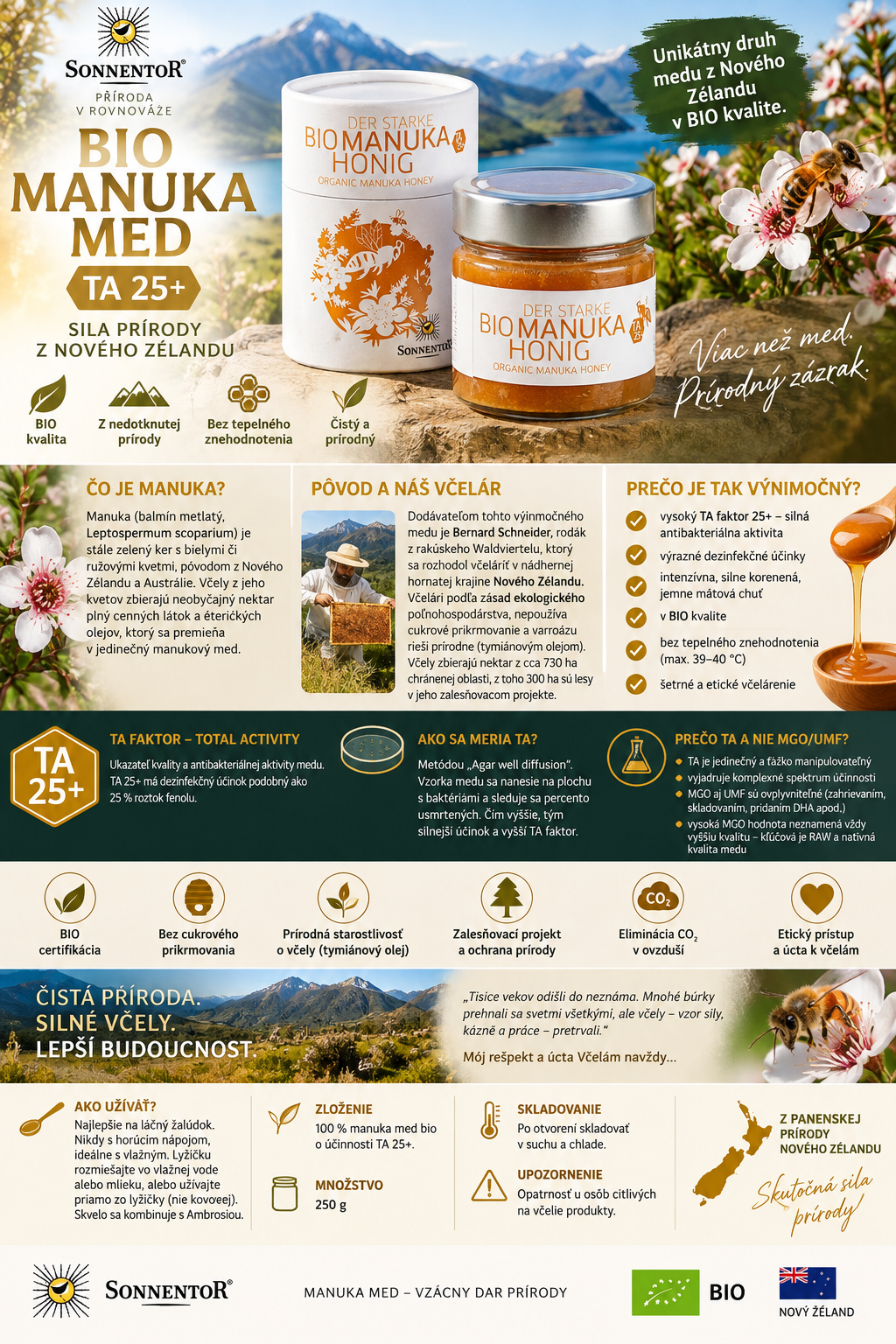
Illustrative product infographic:

Product reviews
Product discussion
There are no questions yet.
Reviews
There are no reviews yet.